Showing posts with label Indie gaming. Show all posts

Monday, 18 May 2020

5 Ways Coronavirus Affected The Games Industry

It's no secret that the gaming industry has seen a huge leap in the past few years, due to the outpouring of quality content being produced by the companies behind incredible games such as Uncharted and Apex Legends. But, over the last few months, lockdown and quarantine have had a major impact on the games industry as a whole, beyond a few simple numbers and statistics - and not always for the better. Read on, to find out 5 ways Covid-19 has affected the games industry, positively and negatively. 

Gray Scale Image of Xbox Game Controller


35% Increase In Sales


Overall, the general upturn in sales is not surprising. With more people having to stay at home, after being laid off, on furlough or simply working from home, people are using the extra time to wind-down and enjoy their day. This is already hard enough, given the circumstances, but the larger corporations have done well to cope with demand.

Some companies are even offering up free games which, despite the contradictions suggesting game sales would decrease with these options, it has actively encouraged more people to get into gaming. Especially as there are no more options than ever, when it comes to staying connected with friends and family through online games.

There has been a 63% increase in the sales of hardware (consoles, VR headsets and so on) and a 34% increase in software - the bread and butter of the gaming industry. This is without the major impact of digital sales of Animal Crossing, which doesn't factor into these statistics despite being released in March.

When we include Animal Crossing - one of the most popular games to have ever been released on Nintendo, accounting for 50% of the total, digital sales in March - those numbers skyrocket. For Nintendo alone, a new sales record was set in the same month, more than doubling the numbers gained from the same time, last year.


20% Reduction In Productivity

It's not all good news, however, as a loss of productivity has also had a major impact in developing games. While some of this is due to employees contracting Covid-19, there is also a huge problem with gig-workers being cut off from many of the larger firms. At the same time, smaller, younger developers are struggling to ensure everyone gets high-quality gear at home, to allow for the same quality to be produced, remotely.

Man Wearing Black Polo Shirt and Gray Pants Sitting on White Chair

All of this, of course, does not include the mental strain that comes with producing high-quality games during a global pandemic. Managing your mental health is tough enough, without the added struggles of setting up a new routine and staying sane, when it feels like the whole world is losing its mind. While it's fair to say that working from home can help in some aspects, it's also no secret that those who have creative minds are more likely to suffer from mental health problems. Naturally, many of these minds are working hard to keep up with current progressions in development, so those will naturally take a toll on the productivity of the workforce.

Games Have Been Delayed


As a possible contender for understatement of the year; Fighting to get works that are currently in development set up and shipped has proven to be difficult. As well as finding the right staff, or fighting with the cuts called for by shareholders, who are seeking to keep high profits, there are post-productions issues, too.

Most studios will be working, well beyond the development of the actual game, in order to get great copies of incredible games to you and your console. Quality assurance, marketing, physical production, shop closures and limited levels of press all have a major effect on whether a game will be considered profitable. As such, it's usually beyond the jurisdiction of the developer themselves to effectively produce a game, once it's left the writing, programming and development stage.

The Last Of Us Part 2 Pre-Order Guide: Special Editions, Release ...

Larger companies, such as Naughty Dog, have had a lot of bad press coming from fans, due to the delays in shipping - before finally coming up with a final release date, shortly after leaks were produced by hackers. However, such is life that, if you want DLC's, they can only be produced after a successful launch, and for those seeking a proper commitment to smooth gameplay, a wait is to be expected.

Aside from struggling to get the components required (everything from those plastic cases to the console bundles), there haven't been any major promotions available to help sales along. With companies often operating at a loss until the release of the game itself, it's hard to say how financing will be able to work until predictions are available - and most of those will be withheld until the market eases itself out of the Covid-19 downturn.


Does Valve deserve Steam's 30 percent cut? Many developers say no ...

Smaller companies and games from independents will also be struggling with securing the financing required to help development to shuffle along. Without the added help of investors, many of these indie developers and gaming companies are struggling to make ends meet and are working themselves to the bone to keep going. Naturally, this means delays going on for the foreseeable future. But hang tight and be patient - all of your favourites will be with you, soon.

Screen Time Increased


Any gamer will tell you that the industry is about so much more than simply buying a game, playing it and throwing it away. This is a niche that thrives on the collective experience of what it means to suspend your disbelief and truly take part in an immersive experience.

One major player in the business of broadcasting and sharing gameplay is the livestreaming platform, Twitch. Already taking a good share of the amount of screentime that spectators will partake in, Twitch is one of the most successful streaming companies ever created, with an estimated net worth of around $5 billion. It outstrips streaming time on Youtube by 300%, and those seeking to gain an income through gaming are more likely to opt for Twitch, due to the audience already being game-orientated.
candy, controller, esport

That said, both platforms have seen a major increase in global viewership, with Twitch reporting a 10% increase and Youtube Gaming garnering a 15% increase. In the US, The Hollywood Reporter has stated that Verizon (a telecom firm) has found that online gaming has increased by a massive 75%. Similarly, Italy has shown a 66% increase in terms of hours watched, according to StreamElements.

In-Game Advertising Has Exploded
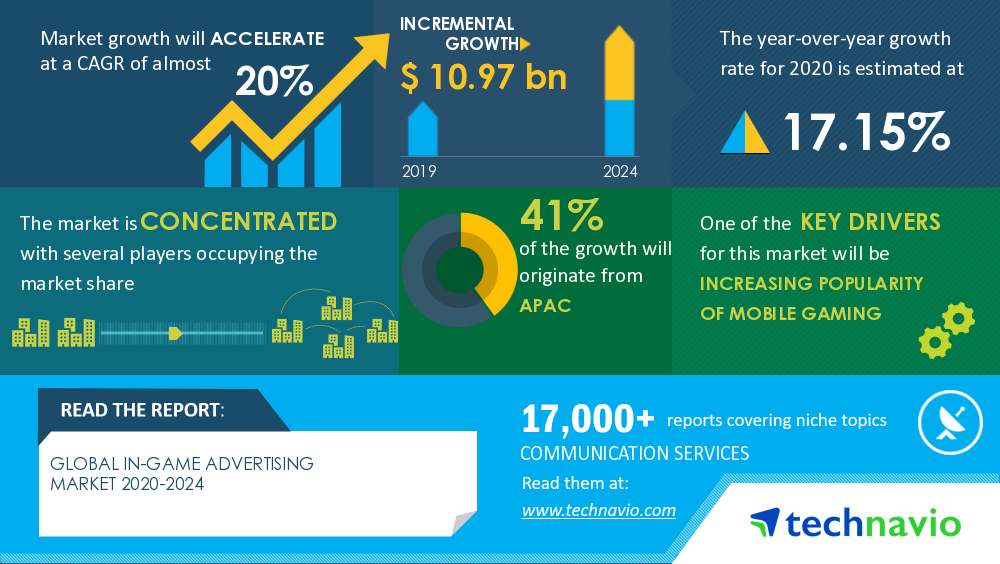

It's no surprise, given its accessibility in terms of initial platform and usability, that mobile gaming has seen the biggest increase of all - becoming the most popular gaming platform. Expected to grow by up to $10.97 billion in the next four years, this impact has caused in-game advertising to explode. For the most part, this is huge in terms of traditional capitalism and will do a great job in helping to boost the economy, by driving sales. However, there is further benefits to be had for public health, if they choose to utilize this ability (of course, that is a topic for future articles!). 


Marketing experts at Udonis say that there has been a 20-30% increase in downloads from the Play store and that, while Facebook have been slower in getting ads approved or adjusted, there has been a lower cost per click, overall. This, combined with increased screentime, means it's an ideal time for those who work in marketing to get into paid ads, rather than looking into the slower (but oftentimes more worthy) organic reach.
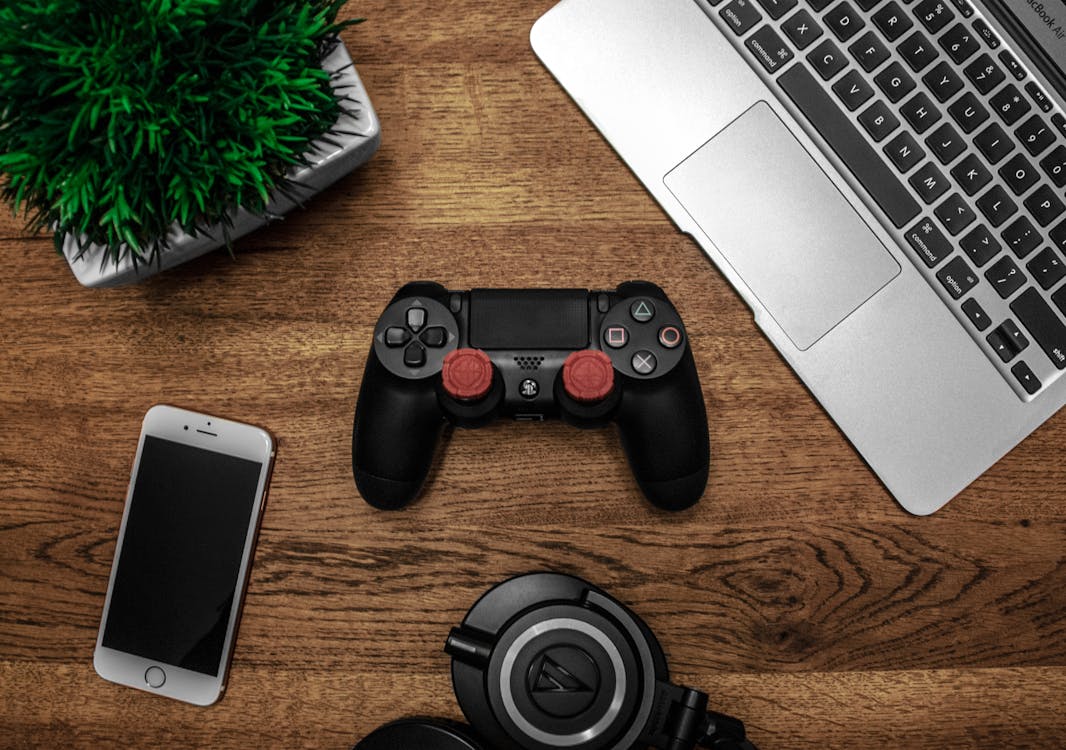
Silver Macbook Beside Black Sony Ps4 Dualshock 4, Silver Iphone 6, and Round Black Keychain on Brown Wooden Table

Gaming has proven to be one of the most resilient industries, standing both the test of time and the sudden impact of a pandemic. Not only is this good news for the industry as a whole, but games have shown to be one of the best ways to stay connected with friends and family, while maintaining social distancing measures.

As such, it's fair to say that gaming has moved beyond the "timewaster" label that many have slapped on the niche, for far too long. Indeed, the past few weeks can be considered a lifesaver for many young adults and multiple generations, beyond helping the introverted and nerdy. Economically, this has been the best year for gaming in over a decade, when sales before the global market crash of 2008. And, while there are still some ways to go in releasing and producing games during strict social constraints, this is clearly a market that is fit and fighting. We just need to figure out how to overcome some small bumps, along the way.

Wednesday, 6 May 2020

Virtual Reality And Its Ever-Changing Place In Our World

Virtual reality has become something of a “like it or loathe it” phenomenon in the world. Yet, despite many people claiming that VR will never “make it” or become popular, statistics show otherwise. According to a PwC report, immersive evolutions are said to benefit the US economy alone by up to $1.2 trillion by 2030 – those are some big numbers for a system and a niche that is supposedly yet to find a home.


Virtual Reality in Gaming


Arguably, it’s currently utilized in the largest capacity via gaming, from the augmented reality of Pokémon Go, through to Beat Saber – both of which quickly became household names upon their release. “It’s definitely been a rollercoaster ride so far”, QA manager, VR expert and host of The VR Talk Show, Kris Gruchalla tells me, “there are so many platforms, nothing is solidified as THE platform for VR and it isn’t user-friendly if you don’t know about PC’s. You can go in completely blind if you don’t know the basics and that’s where the Quest has seen major success, because you don’t need any console of PC – you just buy it, put it on and play games”.


“Indie games especially, have moved into the AA niche – these independent game companies are moving into the mainstream and most VR titles come from indie companies. We’re definitely getting there. The comfort factor has become more important and a new, wireless generation of headsets have become available” she explains. Interestingly, there’s also an increase in the level of body-tracking technology that is coming out alongside these, with finger-tracking in particular, so that games can interact with your entire body and create a more realistic experience for players.

All of these factors are helping more individuals than ever suddenly find themselves considering VR as their next gaming purchase. A sizeable investment, given that the Oculus Quest can start at around £400 or above, and this price being one of the reasons why VR has yet to make it into every household. And yet, if the prices were made more affordable, it can be argued that most people would make the jump into immersive technology – so there’s still clearly an appealing factor to the wider market. Especially as, according to eMarketer, up to 20.8% of the population in the US currently use AR and VR technology.

The biggest appeal, when it comes to VR games, is its accessibility. Anyone can use the systems, whether they’re sitting or standing, and every game goes through a rigorous testing process that allows people of any age or background to use the system. “Movement systems have to be created to work with everyone – but every system also needs to work against motion sickness. Similarly, the training system needs to be fast but simple, to meet these same needs” Kris tells me, “every game is created so that your grandma can experience meeting a shark, or a young kid can play Beat Saber – all with the same system”.


Virtual Reality In Health And Social Care


Clearly, the investment is being made to help push the role of VR in gaming into a more accessible realm – and, like many things we see coming to the forefront of the digital age, this tech is being transferred into the wider world. It is no secret that there are many applications for immersive technology – particularly in the fields of healthcare and social care.

In a world hounded by a highly contagious virus that has entire countries on lockdown, it can be argued that virtual reality can help to combat isolation. Better still, for those who have disabilities or health issues that prevent them from interacting with the world via typical methods, it may open up the opportunity to explore and create.

A few months ago, a paper published in the scientific journal Nature revealed that scientists and engineers had come together to create a device that allows the wearer to literally explore the sense of touch. This could help isolated users to transmit a hug through social media, or even allow prosthetic users to feel the shape of an object that they’re holding.


For those wondering just how “real” this sensation could truly become, we can once again turn our attention to users of virtual reality in other areas, such as gaming. Kris explains that “it’s surprising how quickly your brain adapts to VR in what we call the ‘treadmill effect’. Whereby, once you’ve left the system, your mind can take a few moments to process that it is no longer in that world. As an example, we released a game a while ago that required arm motions to run in the game – and we became so used to it that we used the same hand motion in order to turn corners in real life, that we had to complete in the game”. With this in mind, it is – perhaps – safe to say that we should limit the time spent in these virtual worlds!

VR systems, of course, use the entire body and your own movements to simulate changes in the environment in the virtual world you inhabit. With that in mind, there are still limitations as to who can use this – but with research in the healthcare sector increasingly turning to virtual reality and augmented reality, there seems to be a strong case for further investment. Doing so could lend us the capabilities of allowing those with limited movement to explore new environments, once again.

Kris tells me that there are even games coming out that allows those who are bedridden to see something a little different. “There are fully interactive games you can play while lying down, or you can simply look up at the stars and do some constellation-spotting. Oculus even has an app where you can sit courtside at a basketball game, where you can invite friends and – if you want to – throw popcorn at each other”.

On the other end of the scale, there have been huge leaps in dealing with mental health issues that crop up through our lifetime, thanks to virtual reality. Oxford VR recently found that their therapy-VR treatments had a positive, lasting effect on up to 70% of participants, and have even suggested that this style of treatment can help with everything from depression to schizophrenia and beyond. With mental health costing the UK roughly £94 billion per year, the emerging data around immersive technologies suggest that we may not only be able to help people cope with trauma or mental health atypicalities, but help our economy to recover, too.  

Virtual Reality In The Wider Economy


The gamification of everyday training has been shown to be highly effective in providing cost-effective solutions to major companies. While flight simulators have been used for decades, the technology has now advanced to cover more realistic simulations and a wide range of different environments. ExxonMobil, a multinational oil and gas company, use virtual reality to train employees in health and safety by simulating start-up and emergency exit procedures, for example.

Fortune Business Insights recently published an article suggesting that the use of VR in education and training is increasing its market size at an astonishing rate. It is even predicted that, by 2026, it will reach up to $13,098.2 million (roughly £10.5 million) and will continue to grow beyond this – and that’s just one area of potential for the VR market.


That being said, the BBC recently decided to shut down its VR Hub, which was dedicated to storytelling and exploration, despite the growing market, citing that they will be sharing the research and information gathered through the experience with other markets. The reasons behind this closure aren’t entirely clear – but, given that they will still be licensing the materials produced and are keen to share their info, they could yet make a comeback with further programmes in the future.

Similarly, Samsung decided to drop the Gear VR from any future productions and Google also announced that their Daydream VR headset would be discontinued. The reasons here, however, are a little clearer in that the main drawback to these systems were current “limitations constraining smartphone VR from being a viable long-term solution” in an interview with VentureBeat. Most notable of these limitations was the major drawback of apps struggling to keep up with adapting their systems to meet VR usability. In the end, you can’t have a good-quality system that provides value, if there’s nothing on that system to actually use.


With this in mind, it’s fair to say that virtual reality definitely has a place in the future of our economy, as well as practical uses in medicine and – of course – its natural home in gaming. Whether or not this will happen sooner or later is still up for debate, and depends entirely on the work that is being produced now. Of course, this leaves virtual reality as one of the best areas to invest in, right now, thanks to the inevitable growth we’re about to see in this niche. 

Monday, 16 October 2017

Ersatz; Interview With Paris Stalker at PlayExpo


      The best part about PlayExpo is undoubtedly seeing small games and game designers move up in the world, creating success and gaining massive exposure, from Snake Pass to the new Ersatz. All-iN Indie games are well-and-truly the new kid on the block, consisting solely of Paris Stalker, meaning if you haven't heard of Ersatz, that's kinda understandable- but by no means should All-iN be underestimated. This guy is a game designer and composer, who has amalgamated the two to create a game that's fun to play and surprises you with little treats, including unlockables, tough bosses and an ever-changing soundtrack which causes the controller to vibrate to the beat. In the words of the creator "learning the game is simple, mastering it is not".

   I had a chance to catch up with him and ask what it means to really complete a full game, entirely on your own, and the challenges that accompany it.


I understand you created and finished the game on your own- was there any outside help at all?

    I had some minor help figuring out how to implement shaders from my brother about mid way through development. He is younger than me, but is a crazy, self taught programmer, so helped me understand some of the language. Other than that it was just a lot of testing on friends, and asking the occasional question to some friends in the industry.

What was the big focus for you- what did you really want to be unique about this game?

   I love game music and I adore tight, aesthetically satisfying action. When gameplay and music inform each other both ways you can get a unique synaesthesic experience that isn't often seen. For me to combine these two elements and create a game where the music and gameplay feel at least partly synced, but not lock to the player rails was the goal.

I love that the music is so integral to the whole experience. Is your background in music or gaming, or are you completely self-taught?

    I studied Game Design at Teesside University where I got a 1st and won an award for digital creativity. In the first year the Design, Art and Animation courses all shared the same modules to give us a basic understanding of the disciplines. We were never taught programming. I carried on learning and using skills outside of design throughout the course and beyond, and took the visual scripting I learned from Unreal 3 into picking up bits and pieces of programming after uni. Basically, I'm officially qualified, but I wouldn't have the broad skillset I do have if I hadn't gone some way to teaching myself! Anyone looking into getting into game development I think must understand, that even if they focus on one field, they must be willing to learn about that field of their own accord to at least some extent.

I have to admit the music levels on Rayman Legends were some of my favourites...
    Same here! I loved those levels and I felt like they could be developed into something more, without being tied into following a prescribed beat- it's more fun when you have control over your character but the game still reacts to your movements.

How did you manage to fund all this?

    I have to work part-time, sometimes tipping over into near full time hours! After university and taking part in Dare to be Digital at Abertay University, I moved back home to Canterbury for 2 years, eventually convincing my mum to let me pay her a small rent. By the end of those 2 years I was going near mad despite loving my family very much, but I'd saved up enough to move to Manchester with a game that was most of the ways there. I've not spent a lot on the actual game itself, most of it being since it released. It's definitely not easy, and I'm not really in a position I'd call anything but quite poor for the time being. My passion and friends keep me going.

Where did the idea for ERSATZ originally come from and when did things really begin to snowball for you?

    To be honest, I think ERSATZ's conception was probably the least focused of any project I've worked on in any medium. A musical platformer was the basis, but it went through a number of phases during prototyping. There used to be a full blown cutscene based story, a combat system and all sorts. The basic visuals and the speed focused gameplay were just about the only things that consistently remained, born partly from necessity of limitations as a one man band and partly from my love of the aforementioned tight, aesthetically satisfying action. I kept paring it down, trimming the fat until I had a scope and focus that I felt was achievable. I'd say it wasn't until I'd finished a first playable version of the first level that things started to really move. It was at that point that I started to know what would actually work.

Wow, that's a lot of concepts! How did this fit into your life, given that you had to work elsewhere, as well?
     The flow of development would often slow down and speed up at different times depending on the problem at hand, my life schedule or mood. For example, the whole of the fourth level was entirely redesigned at one point (it's now a lot of people's favourite level!). Furthermore, when I moved cities I was starting to suffer from a mild depression for a number of reasons, which effectively shut down my drive for a good 8 months. I want to stress that when I pulled myself back around, I was stronger than ever. Don't give up!

      Taking a moment out of the interview, I think that's a great thing to focus on- I've been in hospital both when I was 17 and during the last year having had no job, no home and had to hand my daughter over to her dad so she had somewhere safe to stay. I'd lost everything. Then I came out of hospital and at some point gained just enough willpower to start again, getting a job, a home and seeing my daughter regularly. I can now look back at those moments and know that I managed to overcome it. No matter how low you go, you just need that one, tiny thing and the determination to see it through and tell the Black Dog to go fuck itself. Or, in this case, throw your energy into something and be proud of yourself!  

What were the biggest obstacles to overcome- and which part did you enjoy the most in making the game?


    The biggest obstacle was being so isolated. Having to spend such large amounts of time on my own, lack of funds not allowing me to do much, it got really, really tough at times. Since I went to PlayExpo Manchester this year, I came to realise that I could and should have been showing the game off at big events a lot earlier. The attention to build momentum would have been welcome sure, but more than anything, being able to connect with other dev's and people involved in the industry was really good for my mental health.

What (and who) are your gaming inspirations?

    Most of Nintendo's key talent has continually been an inspiration for me, but I am also a starry eyed man when it comes to Japanese legends like Suda 51, Hideki Kamiya & of course Tetsuya Mizuguchi of Rez fame. On the western side of things, Bleed & Valdis Story were both games which spoke to my soul and told me I could definitely do something myself. Honestly, it's hard to pin down anything in particular because it tends to depend on what I'm working on at the time, but I really believe in gameplay and mechanics first. Tell stories with your mechanics, not just your words or fancy cutscenes. Maybe ERSATZ is pretty light on narrative, but I think and hope others agree that it has a tone and atmosphere still.

What's next for you?

    Other than some small tweaks and bug fixes, I have an extra mode I've been working on as a free update. Then perhaps some language options so players from other countries can sink their teeth in. I've also started talking with some industry friends of mine who I went to uni with. They want to work on my next idea with me which is really exciting. I'm quite a ways off announcing anything in particular, but let's just say I'm hoping it's one of the most accessible party games ever made!

I'm really excited for you, you sound like you've worked your behind off and things are finally working out, the game is great and I look forward to playing some more!

     
    ERSATZ came out last month for PC on Steam on September 13th 2017 for £6.99, with the soundtrack also available on Steam and Bandcamp for £2.99. Both are available as a bundle for 20%.