Showing posts with label video games. Show all posts

Monday, 29 June 2020

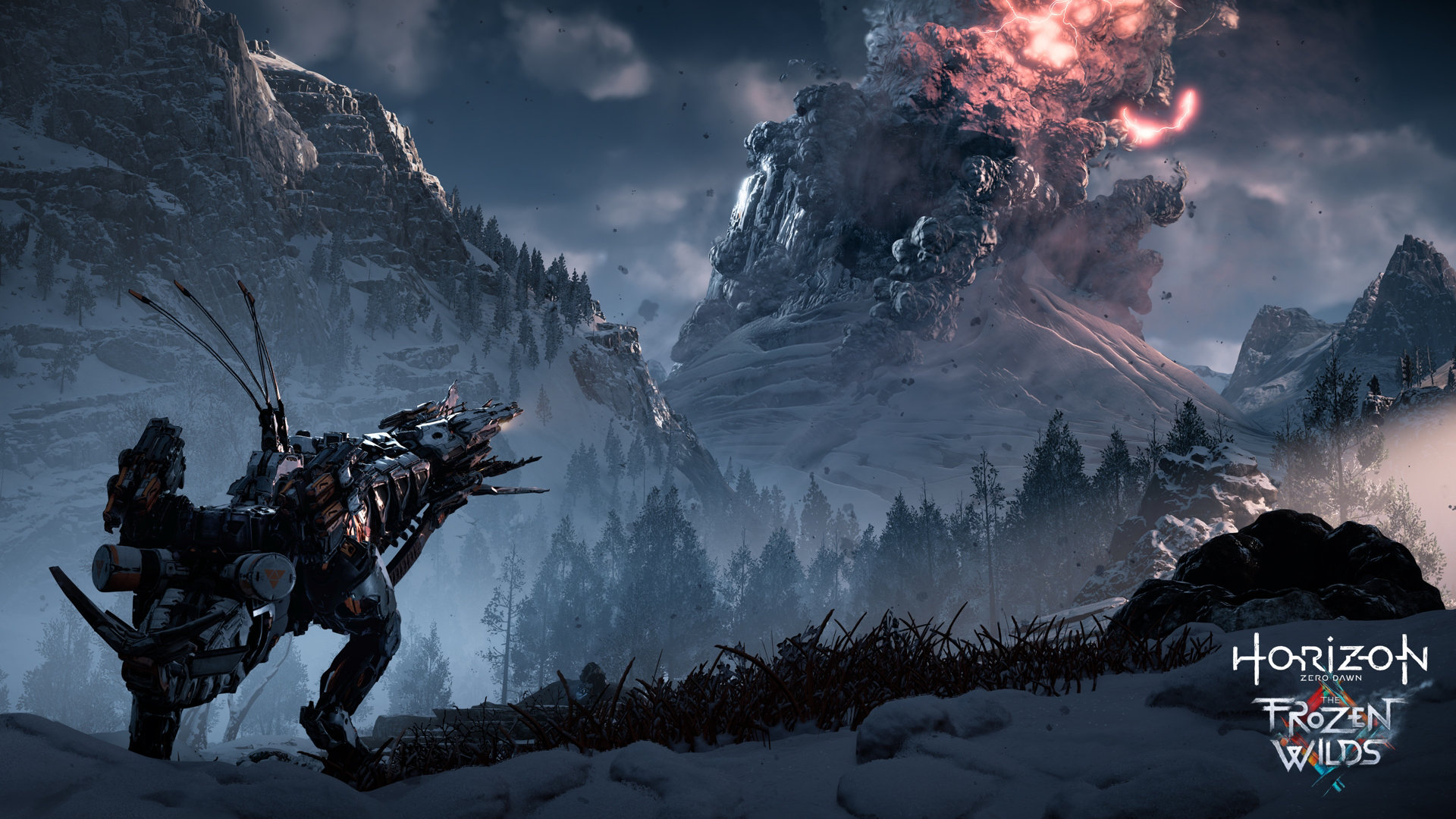
Horizon Zero Dawn: 10 Things Most People Miss During The Frozen Wilds


Highly addictive and astoundingly beautiful, Horizon: Zero Dawn was a major hit, when it was released in 2017, winning awards across the board for it’s writing and gameplay alike. So, when the Frozen Wilds came out later that year, players were keen to jump into the world of Aloy and discover new lore and stories to explore. However, such is the depth and breadth of the game that there are still many missed details that are being discovered, even now – years after it’s initial release. Here, we’ll explore some of the most commonly missed details in The Frozen Wilds and feel free to try a few of these out, for yourself!


1.      Frozen Wilds Is Based In Wyoming


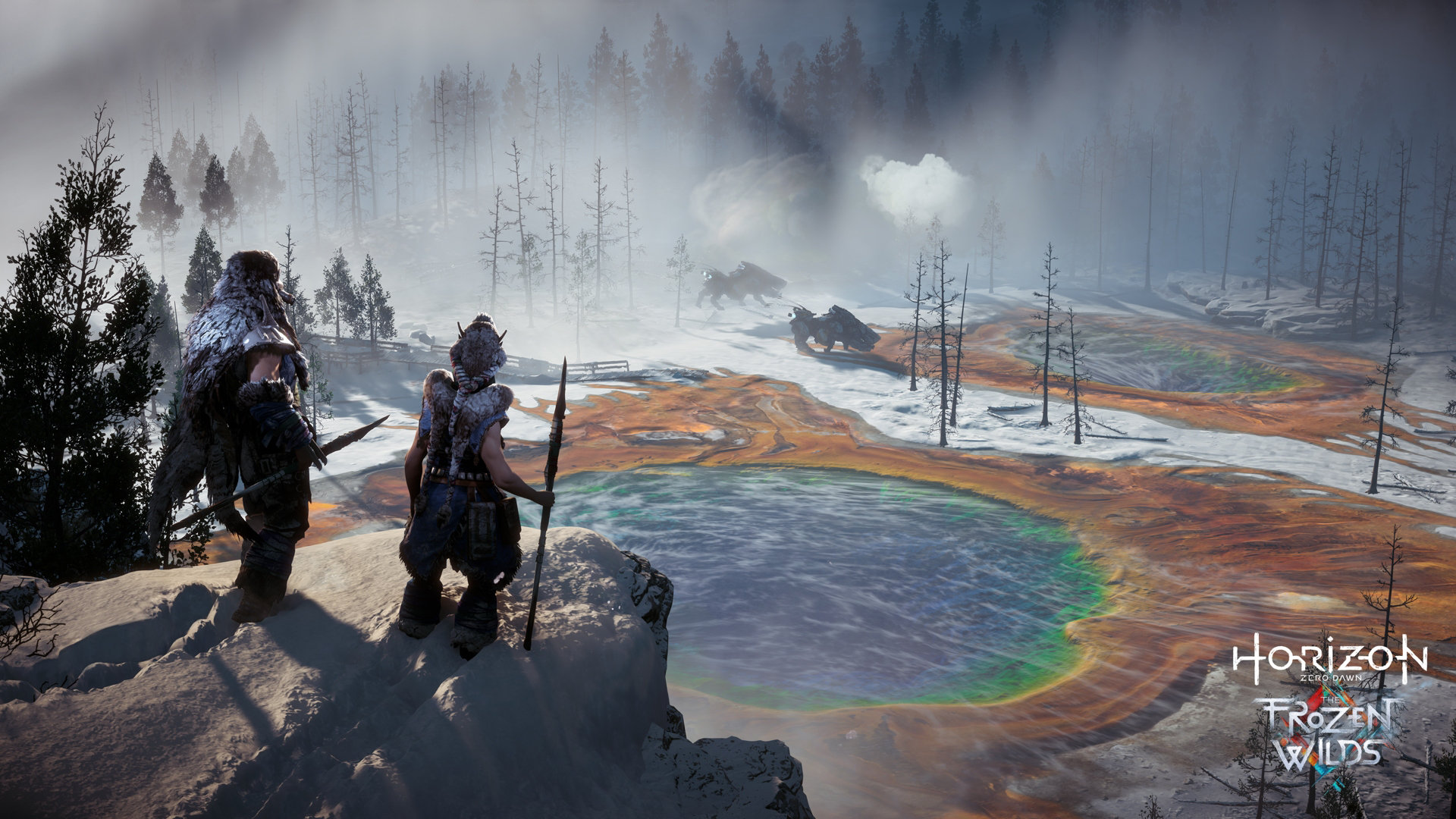
Arguably one of the most beautiful settings in our world, it’s no surprise that the team at Guerilla Games have used Yellowstone National Park in Wyoming as the setting for their DLC. With the base game set across Colorado, Utah and Arizona, it makes sense geographically for Aloy to head north into Wyoming. You can even see some of the most notable landmarks in the caldera and even The Devil’s Tower – a name which is alluded to during the gameplay, when you battle a Daemon on the volcano, Thunder’s Drum.
Horizon Zero Dawn: The Frozen Wilds Game | PS4 - PlayStation

2.      The Name Hephaestus Fits Well With The Lore


For those who haven’t completed the base game or DLC yet, be aware that this particular entry may give away some of the games major plot points; Hephaestus is one of the major AI systems created to help combat the Faro plague, and was tasked with creating life on Earth after the plague was wiped out. The name, like many others in Horizon, was based off Greek gods and Hephaestus was the god of metalworking, of the same name. Not surprisingly, this works brilliantly with the main story of Frozen Wilds, in that robotic creatures are being created by the AI.

3.      The Colors Of Banuk Clothing Are Inspired By The Geothermic Pools In Yellowstone National Park.


The Banuk outfits are created to withstand the harsh weather of the Northern setting and are made up of furs, as well as parts from the robots to add a good layer of armor. The coloring of the outfits themselves, however, comes from the same palette as the geothermic pools in Yellowstone National Park. Namely, yellows, greens and blues, with reds used for accenting. Again, this is another way to place the setting of the game itself, but also sits in well with the idea that these outfits are based to camouflage the tribespeople.

Horizon Zero Dawn: The Frozen Wilds Game | PS4 - PlayStation

4.      The Character CYAN Gives Away Some History


CYAN stands for Caldera of Yellowstone Analytic Network, having been created as part of Project Firebreak, within the game. This top-secret government protection project was designed to help stabilize the environment of the caldera – a fantastic nod to the fact that our own caldera can wipe out half of the planet (or more), should the Yellowstone caldera erupt. In Frozen Wilds, it’s suggested that this threat became imminent and that the entire environmental protection program had to be created, to stabilize this.

5.      You Can Make Snow Angels


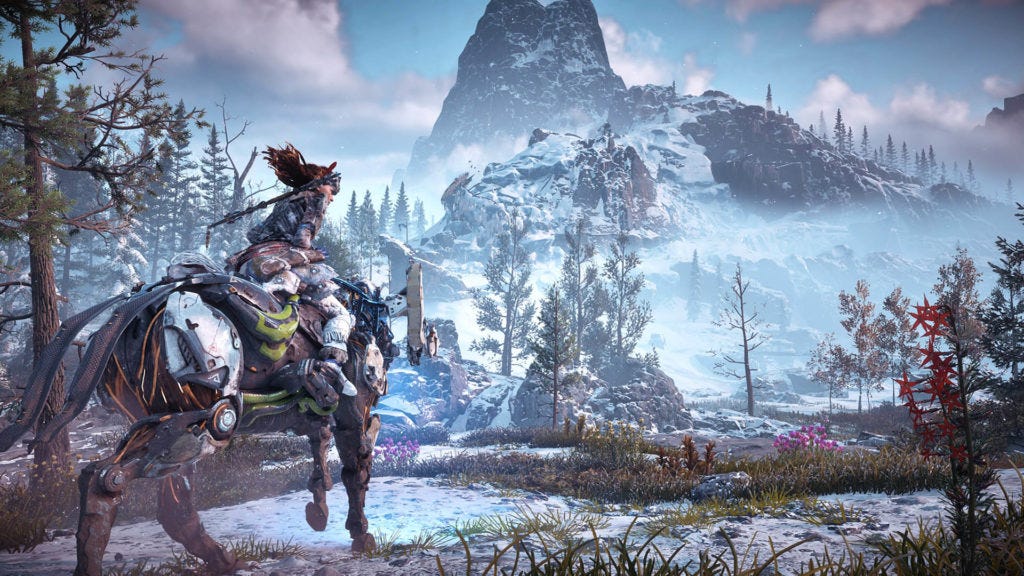
On a lighter note, with the additional options now available in photo mode, you can make Aloy create snow angels! Photo mode is a great add-on for those who want to continue playing, long after finishing the quests and, based in a snow-laden land, it certainly makes sense for developers to add this in, for those who like to get a little creative once they’ve finished the game. Simply enable photo mode, check out the different animations to choose from and have fun making snow angels, before sharing your finished product with your friends!

Horizon: Zero Dawn: The Frozen Wilds DLC Is 'Mid to End-Game In ...

6.      Aratak Will Join You In The Final Fight


If you finish the Frozen Wilds before you complete the base game, then you’ll be pleased to know that Aratak will head to Meridian to join in the final fight against Hades. Simply begin The Looming Shadow quest and take a good walk around the surrounding areas to find all of your allies joining you for the final battle, and you’ll come across your old friend who is “compelled to come for the once-chieftain” along with Aluki.

7.      Epsilon Cauldron


For the completionist among you, it can be worth noting that the Epsilon Cauldron located in this part of the game can only be entered and completed once, as the entrance is unique in how it seals itself after you’re finished. So, if there’s anything you feel you need to complete within the cauldron itself or if you’ve missed a few machines, it can be worth making sure you’ve collected everything before using your usual override mechanism. Once you’re out, you won’t be able to return and work your way through again.

Horizon Zero Dawn: The Frozen Wilds review - Polygon

8.      Aloy’s Story Can Be Heard After Frontier Justice


 After besting Aratuk as part of the main quest, you can begin work on the side quest called Frontier Justice. Investigating a miscarriage of justice in the tribe, Aloy works her way to the scene of the murder and discovers the actual murderers, eventually being caught investigating and having to kill the three and rescuing the wrongly convicted and exiled Inatut at Cloud-Shear. After this, you can find Inatut in Song’s Edge, retelling the story of Frontier Justice to a group of children.

9.      Your Movements Have An Effect On The World Around You


The attention to detail by the team at Guerilla Games has definitely not gone unnoticed in the past, but with a few additional months to help improve the gameplay and environment, a huge difference can be seen in Frozen Wilds. Not only with the snow give way to reveal the grass beneath, as you move around the world, but you can alter the way chimes sound by running past them or spinning around, and even see your footsteps (as well as watching them slowly refill with snow) as you move.

The Making of Frozen Wilds' Cutscenes - 80Level - Medium

10.   Aloy’s Conversations Have Improved


While not entirely dissimilar to our last entry, you can also see major improvements in the interactions that Aloy can have with NPC’s across the DLC. While smaller chats in the base game can often be very similar, in terms of information given and how Aloy responds to these, there is added depth in the Frozen Wilds expansion that shows vast improvement. Not only does Aloy frown or smile, depending on the circumstances, but she walks back and forth, makes hand gestures and generally seems more involved, physically, with the conversations she is having.

Wednesday, 6 May 2020

Virtual Reality And Its Ever-Changing Place In Our World

Virtual reality has become something of a “like it or loathe it” phenomenon in the world. Yet, despite many people claiming that VR will never “make it” or become popular, statistics show otherwise. According to a PwC report, immersive evolutions are said to benefit the US economy alone by up to $1.2 trillion by 2030 – those are some big numbers for a system and a niche that is supposedly yet to find a home.


Virtual Reality in Gaming


Arguably, it’s currently utilized in the largest capacity via gaming, from the augmented reality of Pokémon Go, through to Beat Saber – both of which quickly became household names upon their release. “It’s definitely been a rollercoaster ride so far”, QA manager, VR expert and host of The VR Talk Show, Kris Gruchalla tells me, “there are so many platforms, nothing is solidified as THE platform for VR and it isn’t user-friendly if you don’t know about PC’s. You can go in completely blind if you don’t know the basics and that’s where the Quest has seen major success, because you don’t need any console of PC – you just buy it, put it on and play games”.


“Indie games especially, have moved into the AA niche – these independent game companies are moving into the mainstream and most VR titles come from indie companies. We’re definitely getting there. The comfort factor has become more important and a new, wireless generation of headsets have become available” she explains. Interestingly, there’s also an increase in the level of body-tracking technology that is coming out alongside these, with finger-tracking in particular, so that games can interact with your entire body and create a more realistic experience for players.

All of these factors are helping more individuals than ever suddenly find themselves considering VR as their next gaming purchase. A sizeable investment, given that the Oculus Quest can start at around £400 or above, and this price being one of the reasons why VR has yet to make it into every household. And yet, if the prices were made more affordable, it can be argued that most people would make the jump into immersive technology – so there’s still clearly an appealing factor to the wider market. Especially as, according to eMarketer, up to 20.8% of the population in the US currently use AR and VR technology.

The biggest appeal, when it comes to VR games, is its accessibility. Anyone can use the systems, whether they’re sitting or standing, and every game goes through a rigorous testing process that allows people of any age or background to use the system. “Movement systems have to be created to work with everyone – but every system also needs to work against motion sickness. Similarly, the training system needs to be fast but simple, to meet these same needs” Kris tells me, “every game is created so that your grandma can experience meeting a shark, or a young kid can play Beat Saber – all with the same system”.


Virtual Reality In Health And Social Care


Clearly, the investment is being made to help push the role of VR in gaming into a more accessible realm – and, like many things we see coming to the forefront of the digital age, this tech is being transferred into the wider world. It is no secret that there are many applications for immersive technology – particularly in the fields of healthcare and social care.

In a world hounded by a highly contagious virus that has entire countries on lockdown, it can be argued that virtual reality can help to combat isolation. Better still, for those who have disabilities or health issues that prevent them from interacting with the world via typical methods, it may open up the opportunity to explore and create.

A few months ago, a paper published in the scientific journal Nature revealed that scientists and engineers had come together to create a device that allows the wearer to literally explore the sense of touch. This could help isolated users to transmit a hug through social media, or even allow prosthetic users to feel the shape of an object that they’re holding.


For those wondering just how “real” this sensation could truly become, we can once again turn our attention to users of virtual reality in other areas, such as gaming. Kris explains that “it’s surprising how quickly your brain adapts to VR in what we call the ‘treadmill effect’. Whereby, once you’ve left the system, your mind can take a few moments to process that it is no longer in that world. As an example, we released a game a while ago that required arm motions to run in the game – and we became so used to it that we used the same hand motion in order to turn corners in real life, that we had to complete in the game”. With this in mind, it is – perhaps – safe to say that we should limit the time spent in these virtual worlds!

VR systems, of course, use the entire body and your own movements to simulate changes in the environment in the virtual world you inhabit. With that in mind, there are still limitations as to who can use this – but with research in the healthcare sector increasingly turning to virtual reality and augmented reality, there seems to be a strong case for further investment. Doing so could lend us the capabilities of allowing those with limited movement to explore new environments, once again.

Kris tells me that there are even games coming out that allows those who are bedridden to see something a little different. “There are fully interactive games you can play while lying down, or you can simply look up at the stars and do some constellation-spotting. Oculus even has an app where you can sit courtside at a basketball game, where you can invite friends and – if you want to – throw popcorn at each other”.

On the other end of the scale, there have been huge leaps in dealing with mental health issues that crop up through our lifetime, thanks to virtual reality. Oxford VR recently found that their therapy-VR treatments had a positive, lasting effect on up to 70% of participants, and have even suggested that this style of treatment can help with everything from depression to schizophrenia and beyond. With mental health costing the UK roughly £94 billion per year, the emerging data around immersive technologies suggest that we may not only be able to help people cope with trauma or mental health atypicalities, but help our economy to recover, too.  

Virtual Reality In The Wider Economy


The gamification of everyday training has been shown to be highly effective in providing cost-effective solutions to major companies. While flight simulators have been used for decades, the technology has now advanced to cover more realistic simulations and a wide range of different environments. ExxonMobil, a multinational oil and gas company, use virtual reality to train employees in health and safety by simulating start-up and emergency exit procedures, for example.

Fortune Business Insights recently published an article suggesting that the use of VR in education and training is increasing its market size at an astonishing rate. It is even predicted that, by 2026, it will reach up to $13,098.2 million (roughly £10.5 million) and will continue to grow beyond this – and that’s just one area of potential for the VR market.


That being said, the BBC recently decided to shut down its VR Hub, which was dedicated to storytelling and exploration, despite the growing market, citing that they will be sharing the research and information gathered through the experience with other markets. The reasons behind this closure aren’t entirely clear – but, given that they will still be licensing the materials produced and are keen to share their info, they could yet make a comeback with further programmes in the future.

Similarly, Samsung decided to drop the Gear VR from any future productions and Google also announced that their Daydream VR headset would be discontinued. The reasons here, however, are a little clearer in that the main drawback to these systems were current “limitations constraining smartphone VR from being a viable long-term solution” in an interview with VentureBeat. Most notable of these limitations was the major drawback of apps struggling to keep up with adapting their systems to meet VR usability. In the end, you can’t have a good-quality system that provides value, if there’s nothing on that system to actually use.


With this in mind, it’s fair to say that virtual reality definitely has a place in the future of our economy, as well as practical uses in medicine and – of course – its natural home in gaming. Whether or not this will happen sooner or later is still up for debate, and depends entirely on the work that is being produced now. Of course, this leaves virtual reality as one of the best areas to invest in, right now, thanks to the inevitable growth we’re about to see in this niche. 

Monday, 20 April 2020

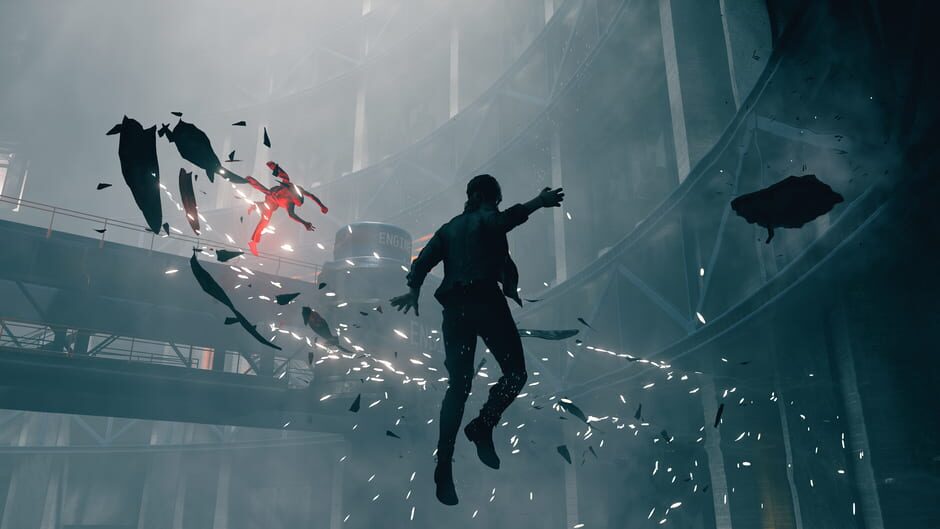
Control Review


I'm a huge fan of action-adventure games, being shamelessly fond of third-person perspectives and a strong storyline. So, when I was recommended Control, I couldn't wait to get my teeth stuck into a new world - it had everything I could possibly want in a game, especially when it came to the consistently high ratings from the usual publications, IGN, Gamesradar and so on. Even better, it was recently on offer on the PSN store, something we could all do with during isolation - so I decided to delve into Jesse Faden's world for the first time. 


It begins with a rather depressing monologue that sets us up for the neo-noir theme throughout the game, and quickly leads to you becoming the Janitor's assistant and the new director of the Federal Bureau of Control. Aptly named, considering everything in this company appears to be very specific and very rigid in this game - from the brutalism of the building's architecture to the inflexible personalities. Even the interactions between the main character and the NPC's is dry at best, with the warmest character arguably being Emily Pope, whose fast-talking rhetoric can quickly give you a headache if you don't keep up. 

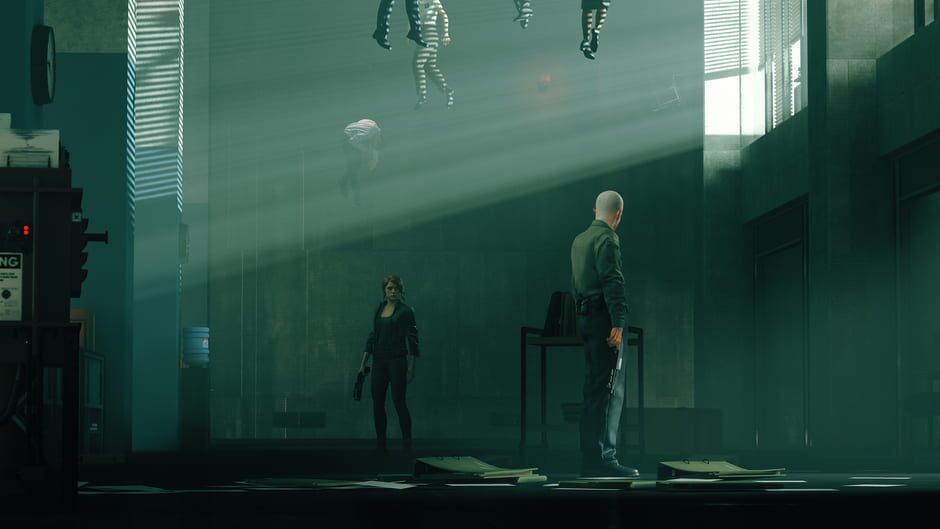
The house, of course, moves seemingly of its own volition, twisting and turning through different dimensions as you explore. And the novelty of this can wear off quickly, if you don't make use of the in-game map that takes up the entire screen, when highlighted. Be warned that this is not a feature you should use when entering a new room, as your extra-dimensional friends - called the Hiss - will spawn at the same time. 

The frustration of constantly fighting the Hiss is highlighted by the inability to create regular checkpoints, due to the open nature of the game - and would be fine, if it weren't for the fact that you constantly need to defeat foes that you have already conquered, each time you die - with only bosses appearing to be exempt from this. In other words, if you die while trying to figure out a boss' weak points, for example, you'll need to go from the last checkpoint, back through the building and return to the fight - listening to the in-game chatter and fighting the respawning baddies, each and every time. 

Each and every, frigging, time. 

Again, without waypoints to help you decide on which direction to go, when seeking out the story, you may find yourself doing this a lot. Too much, in this humble writer's opinion. While I can see how this might add to the overall mood of the game (a lack of control - an irony I'm sure was high-fived upon, in the office) it detracts from the gameplay. 

And herein lies the problem - Control stops being fun after the first few missions. It becomes tedious and many players appear to be losing interest in the story around halfway through the gameplay. This is a shame, really, as things do become much more lively and interesting toward the end of the game again - in particular, a fun bounce around the Ashtray Maze can be a memorable gaming experience - but it shouldn't feel like a slog to get to this point. 

You spend an awfully long time trying to figure out what happened to Jesse Faden's brother, Dylan - but, when you eventually come across him as part of the main story, the experience is anti-climactic. Worse still, what you expect to be a big, final boss is actually just an old friend passing you a small trinket to push the game forward. There's a frustration in each and every plot point that makes you roll your eyes and mumble "get to the point, Jesse" more times than I care to recall.

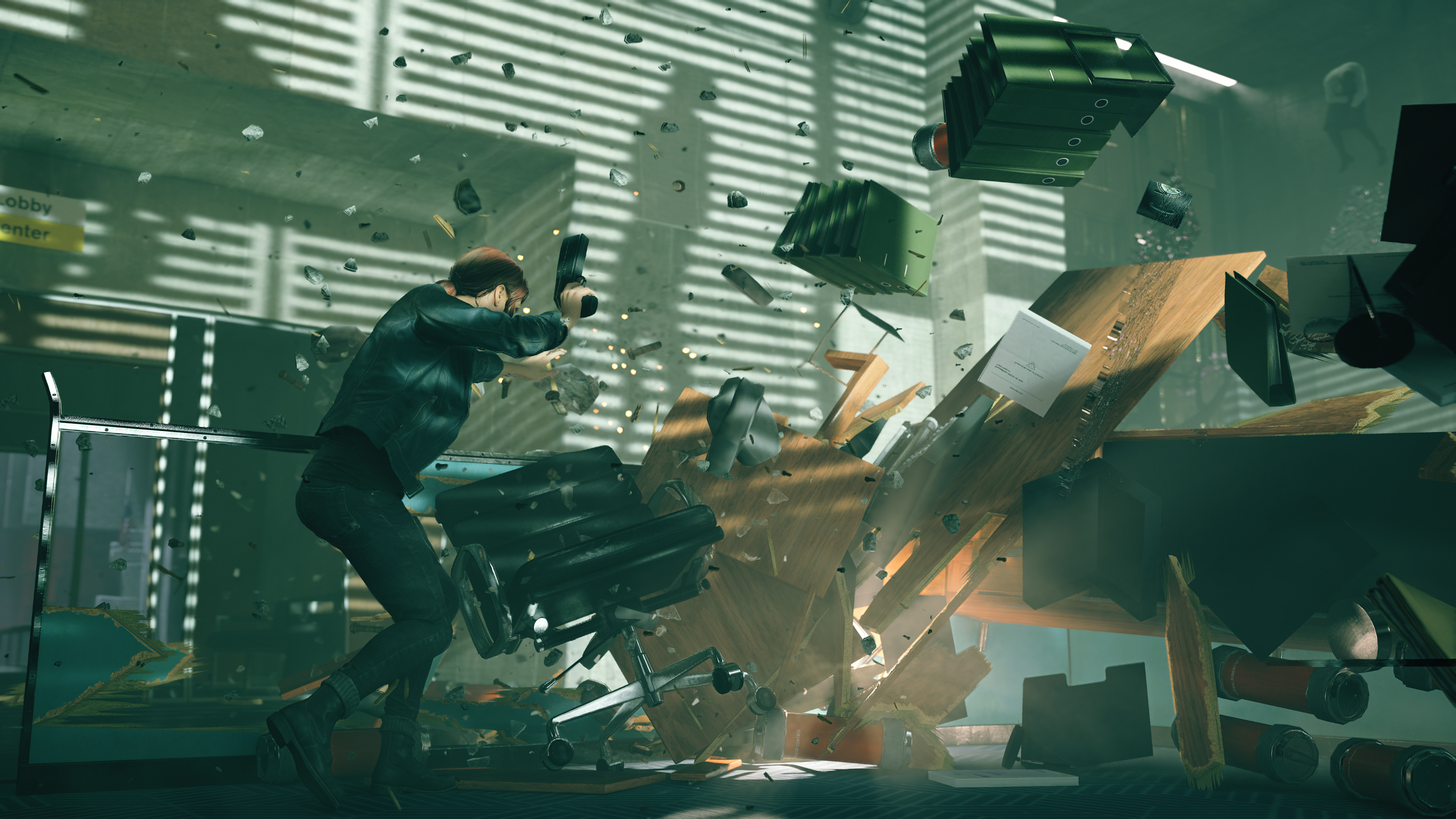
It's a shame, really, as the actual controls of Control are pretty good - being able to use telekinetic powers always correlate to a good time, in terms of gameplay. Picking up the new powers of levitation and mind control as the game progresses also help to clear away the waves of enemies, as you become more experienced. But, what initially starts out to be some creepy Hiss baddies, eventually gives way to simply running past them in order to progress with the story, due to said frustration - so you don't end up utilising these as much as you might want. 

The skill tree, as you might expect, is pretty standard - although getting additional skill points is directly linked to upgrading other parts of the game. You can even improve your gun with points collected by defeating Hiss agents and random pick-ups from your fallen foes, which leads to some interesting personalisation of your weapon. It's definitely recommended that you do this regularly, in line with your own gaming style, as the powers Jesse gains throughout Control are limited by her energy - a nice added feature that ensures you aren't simply throwing everything around until you're surrounded by dead agents of the Hiss. 

As a result of all of these points, however, Control simply isn't as fun to play as I expected. There are definitely a lot of good points to this game, but the overall feel of the story is more tedious - and even irritating at parts - than it is enjoyable. Exciting moments might give you a second or two of "ah, that's cool" but, beyond this, I never felt like there was a need to keep pushing forward - a feeling enhanced by the underwhelming ending.  

My advice, when going into this experience, would be to do so with an open mind and no prior knowledge of the game itself. The hype and positive reviews may lead you to the same experience as I, so I wholeheartedly recommend taking this with a pinch of salt. Enjoy yourself and take your time when exploring, to ensure you don't miss any extras (as I did, before having to backtrack in order to progress). If you're looking for story and a linear narrative over the gameplay, then this probably isn't the right genre for you - but if you like killing baddies and getting in-game points, then you may well enjoy Control for all it has to offer you. 


Sunday, 29 March 2020

Interview with Screenwriter and Actor David Hayter


David Hayter is definitely a busy guy. When I first contact him to request an interview, he is quick to accept and more than willing to offer up as much time as I need – but finding that time is a very different story. Between his busy schedule and well-deserved downtime, we go back-and-forth for a short while, in an effort to slot a chat in. In the end, it comes as a last-minute message, “can you do today?”, and with a very happy acceptance from myself, we manage to squeeze in a few hours between his morning writing and an afternoon meeting.

Beginning with a brief chat about my unusual accent, he manages to pin down not only exactly where I’m from, before I have a chance to explain, but follows with a dead-on impression. It turns out one of the reasons he’s able to do this is due to his previous talks with the legend that is Alan Moore. Of course, for those who follow Hayter’s history, they will know he has worked on the master novelists previous work of Watchmen – a popular textual transformation of the graphic novel created in 1986-7.

“I was actually over in Manchester about 2 summers ago, for a comic con. It was very nice! And ‘Hayter’ is actually Welsh, so it’s really like my homeland”. Travelling for cons, of course, is part and parcel of David’s job – but he was a sufferer of wanderlust long before his career took off. Canadian by birth, he and his mother travelled considerably as kids, before he returned from Japan at around the age of 20, when he eventually moved back to California. These early years of adventuring, it turns out, were a key part of how he got into performing.

“To get to know the community, my mother would take part in a lot of community theatre projects. We moved to California when I was 9 and she saw an ad for a kid's theatrical production of Pinocchio. She told me to audition – so I did – and I got the part. After that, a girl asked me for my autograph, and I thought ‘oh, this is pretty good’. The writing came up later than that, when I was about 12.” 

Growing up at a time when Star Wars and Indiana Jones were hitting the pictures, Hayter was inspired to write stories of fantasy and adventure, along the same lines. And so, he began to put pen to paper, in an effort to bring his imaginary worlds to life.

He laughs when I ask how this turned into a profession, “I don’t think I ever became a professional!” he remarks, before going on to say how he managed to write a full script when he turned 22. “It was a terrible vampire script. I had a director attached and we tried to get that set up but never quite did. Apart from that, I never thought of pursuing writing as a career”. Like so many, he was working hard in every way he could, in an industry he loves, when he “fell ass-backwards” into his first professional scriptwriting job.

 “I got a job answering the phones on the movie X-men, but I knew the director – so, I suggested a scene to him and he went ‘yeah, go write that for me, let’s put that in the movie’. After that, I was doing re-writes. By the end, I had done so much writing that I ended up getting sole credit.” At this point, I can’t help but comment on the rarity of having a director allow for a perceived outsider to have so much impact on a major film. “Yeah, he wasn’t precious about it, at all. It was good of him to do that, and it helps that he wanted a writing partner who wasn’t tied down by contracts and one-step deals. He could make me write as many pages as he wanted, I was just always there and able to make changes.”
David Hayter new profile picture on Twitter is...pretty good ...Naturally, it helps to always be available to your director when they want or need you. That said, having such an intimate knowledge of the characters – and how they think, act or interact with each other - before you need to write about them, can be a major benefit.  Being a big pop culture geek and gamer at heart, David inherently knows what works and what doesn’t, when it comes to writing up a script or voicing a beloved game character. Yet, this doesn’t always have to be the case, “there’s no one way to do it – it’s a different path for everybody. I was hoping that, when I arrived, they would turn me into Tom Cruise. Unfortunately, it didn’t work out that way”.

He is keen to point out that, in the “8 or 9” years it took him to start acting and screenwriting at AAA level, he had to venture into other areas of Hollywood life, which led him to voice acting among other career paths. “That’s just how I found my niche, it’s how everyone finds their niche” he states, when I ask if the variation is important to professional development.

In terms of his personal preference, when it comes to acting over writing, there are no clear winners in Hayter’s’ eyes. “I prefer the job of acting, above anything – particularly voice-over, which is just great fun. But I prefer the career of writing, because you have a little more control over where you’re headed and the projects that you get to do”. At the end of it all though, this is clearly a guy who is enjoying how his trajectory has curved, as he loves almost every aspect of every gig he takes on.

“I think all actors should learn about writing, and learn to create their own material” he mentions, when we discuss how both sides of his career can help to support the other, “it’s the only way, as an actor, that you can have any control over what you do and what parts you get to play”. So, does his work as a screenwriter allow him to shift and change up any scripts he’s given? Not necessarily – but it certainly does no harm when he finds himself writing up new works.

“It definitely helps when you’re creating something, to know how the lyricality of the voice works off the page. Dialogue that looks good on the page, doesn’t necessarily speak well – and vice versa. I turned in a script for a show last year and the showrunner actually said to me ‘your dialogue worked a lot better than I thought it would!’. But that’s how people talk – it can look simple, or fragmented and even monosyllabic – in the end, the rhythm is there and it’s real”.
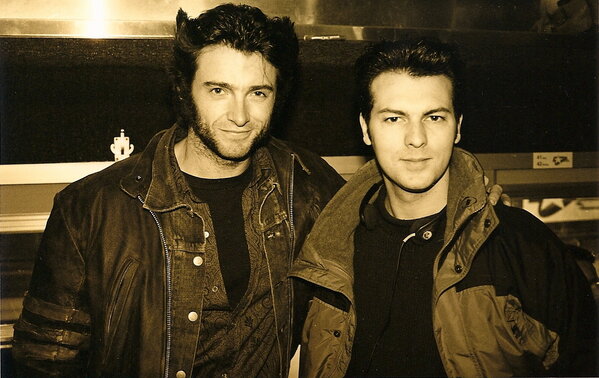
David Hayter on Twitter: "@Dak_N_Jaxter "Saw you and Hugh Jackman ...There’s a running theme here, between David and other actors I’ve spoken to in the past, where music and voice acting seem to run concurrently with each other. So, I quickly chime in and ask him if he has any musical background, to which he responds “yeah, actually, I went to Ryerson Theatre School in Toronto, which had a strong music component to it”, before he laments his dancing skills – which they also attempted to teach him.

“I’m also learning to play the guitar” he drops in, casually, before discussing how working with music helps him to activate a part of his brain that allows him to relax and regroup his thoughts. “If I’m writing all day and my brain is just cooked, I can sit down and lose myself in the guitar and the music”. Here, we agree, the order of mathematical elements found within music can help to engage a completely different side of your abilities. “Writing can really suck the life out of your brain, especially if you’re doing 8 hours a day, to a point where you can’t really even communicate anymore. So, using music, you’re able to refocus on what matters”.

At this point, as I’m sure you can tell, it’s clear that David is remarkably easy to talk to about almost anything. This seems to be a recurring theme within the voice acting and screenwriting world, which leads me to ask whether being able to gel well with a team is something that is essential to the job. “It’s definitely not essential – but being fun and engaging will take you a lot further than being an obnoxious prick. I think a huge benefit to the ‘Me Too’ movement is that there has been a real effort for people to behave better, too. I’ve always tried to be respectful, of course, but there’s definitely a lot less lunatic, a-holes to deal with now!”

Working in Hollywood is, without a doubt, very stressful and David makes a point of highlighting how easy it is to become swept up in heated debates about budgets, time and pressure. In order to combat this, he looks at those he works with and always tries to make the job engaging and fun for them, as well as himself. “That’s also where the acting side of it can come in,” he tells me, “because most writers are generally very isolated people. That usually leads to them not communicating particularly well, face-to-face, as their work almost entirely consists of written correspondence. But, if you’ve been an actor and had to go through hundreds and hundreds of auditions, it becomes a lot easier to talk to people and interact”.

As it turns out, this is also a key part of staying cool when meeting with directors or pitching huge projects that are close to your heart. While David describes himself as being fairly confident in his abilities, his general demeanour is calm and open - and he’s clearly open to working with the many criticisms that come with writing and acting. “The more relaxed and confident you are, the more likely they will be to hire you and the more confidence they will have in you, as their writer or actor”.

Thus, the biggest piece of advice he can give to new writers is to simply practice being confident when they’re going in to give a pitch. “’Fake it til you make it’ is a common cliché – but it’s true. Watch videos of confident people and do what they do - I got it mostly from Harrison Ford or Tom Cruise. Just watch these people who are so otherworldly confident and create your own take on that. Don’t talk too quickly, don’t be too solicitous and try not to use your nervous face!”.

It’s clear that David Hayter is able to deal with the comings and goings of a fast-moving business with apparent ease, so I’m keen to discuss how he manages stress – particularly at a time like this, where so many people are looking to avoid stress through their writing and other creative outlets. “I read a lot about Buddhism and the Dao, growing up in Japan, so I basically have learned to meditate.” He says, before going on to mention a great technique he learned from a book called Ransom, by Jay McInerney. Using the same system as the character in the book he meditates, one-by-one, on the problems he may be having. “Whether it’s a horrible fight with your girlfriend, or a looming test you don’t feel prepared for – you treat it in the same way. Focus on each one, pluck it out of your brain and put it in a box – and do this for each problem. Once you’ve done that, take the box and set it on fire. Just let it all go.”
Solid Snake voice actor David Hayter
This is not entirely dissimilar to CBT techniques I was taught and have worked with previously, whereby you take a look at each, individual problem and focus on ways to overcome these, separately. Of course, there is no burning box, which means there isn’t quite the same feeling of catharsis. However, upon mentioning this to David, he tells me of another method which he finds is a great way for dealing with writer’s block and general frustration – ideal for working in conjunction with the McInerney technique mentioned, above.

“Just before I got the part of Snake, I read a book called The Artist’s Way, by Julia Cameron -it’s like a workbook to help you reignite your creativity. A big part of that is, in the morning, you just need to write everything out, like a stream of consciousness. Nobody will ever see it, just go for it and you’ll be able to put your problems into perspective.” This technique, he excitedly goes on to say, is also a fantastic way of getting your brain over humps in your writing, “just rant about where you’re at in the plot, and what you’re struggling with – just let it all come out on the paper. In the end, your brain will just start throwing out random ideas, and you’ll suddenly find the problem is being resolved, purely through this technique”.

This, then, explains how David is able to always maintain his composure – even in the most stressful situations. That said, while he strikes me as a very relaxed guy who enjoys the job, whether he sees himself as a laid-back person is still up for some debate. “Sure, for the most part, I’m pretty relaxed. I’m still laser-focused on my work and I’m probably not someone you want to fuck with, though. It’s not so much of a problem anymore, though. When I was younger, I was definitely more problematic!” he tells me, and we quickly exchange stories of being – for lack of a better term – little shits, when we were kids. “That’s good though!” he laughs, “it means you’re living your life and experiencing what you can, despite it all”.

Talking about turns and the unknown, we then get on to what getting the role of Solid Snake meant to him and how it changed his life. “I knew it was always going to be big. I saw the artwork, the cutscenes, and was generally aware that Sony was going to be pushing this – but I had no idea that I’d be talking about it 22 years later. Going around the world and signing autographs, while doing video shout-outs with the same voice”. Nine games later and still very active on the circuits, his Cameo is full of requests for Snake. “It’s the only voice that gets requested! I’m one of the lead Jedi in Star Wars: The Old Republic – nobody ever asks for that!”.

While it’s something he is clearly very happy to do, it still surprises me that so few people have knowledge of Hayter’s writing career or other jobs. This, he says, is due to a distinct lack of follow-through on work that he completes. “I didn’t realise how many of my scriptwriting jobs would actually lead to a movie. In those first few years, I wrote 8 scripts which actually became movies, out of roughly 20 - and I’ve probably written about 40- 45 movies in my career.”
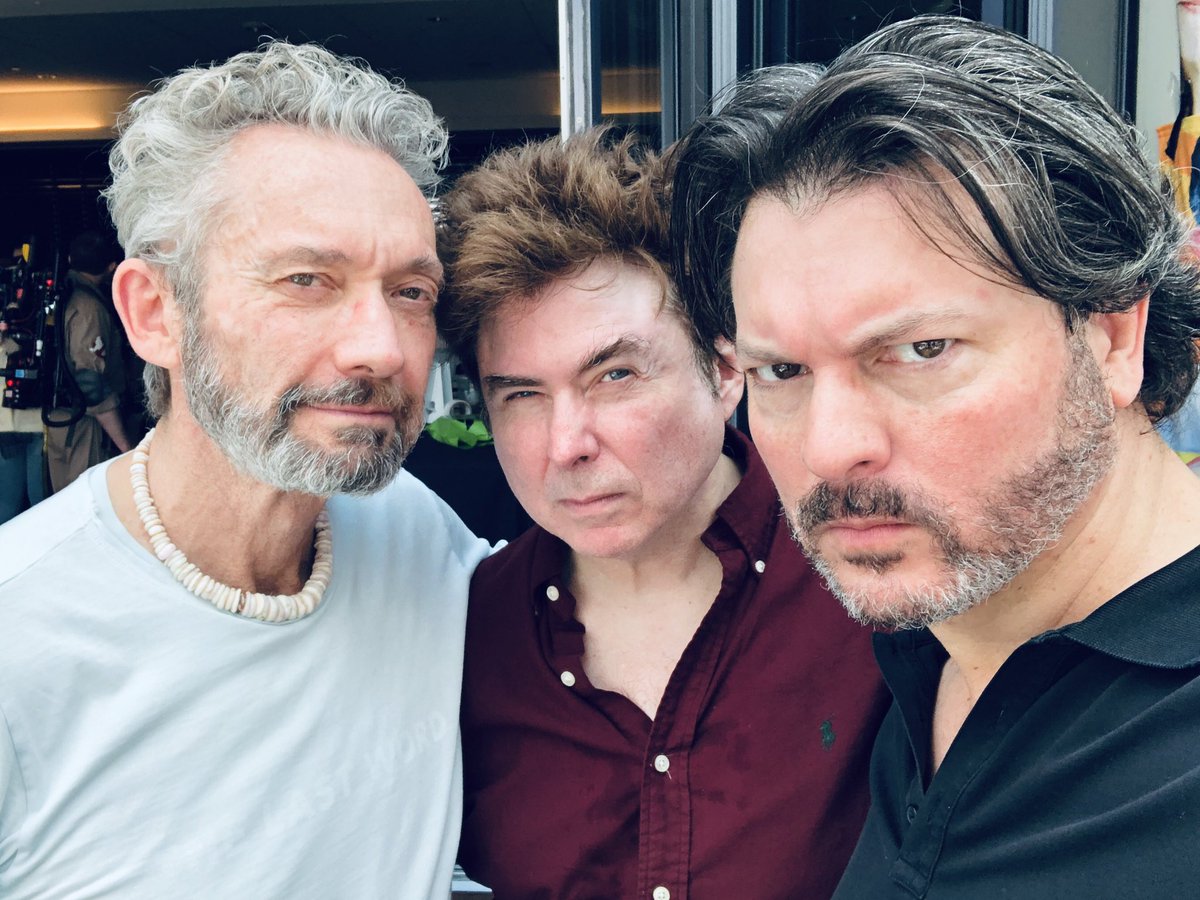
David Hayter on Twitter: "Liquid. Raiden. Snake ...In the end, he decided to side-step his career and work from a lower rung, on a different ladder. By heading to Netflix and asking to be a part of a full writing team there, he feels he has made much more personal progress toward his goals and lead a more fulfilling career. Of course, TV writing is very different to film writing, so he offered himself as 3rd or 4th in the room, without the ties of big budgets and lead credits. “Many people might take it as a step back. I used to be an A-list writer and now I’m a mid-level writer - but it’s fine. It works and it’s invaluable. By putting my ego aside, I found a new way to work to my best ability and get the best projects done”.

The risk, however, has clearly paid off. David now sits at 2nd in the room and has credits as an executive producer, for the show he’s currently working on. “It wasn’t that difficult in the long-run and I’m really happy it’s gone that way. So, my main advice for anyone breaking into the industry would be to not to get too full of yourself – and don’t always believe your own hype. Just be willing to do what it takes to get the best and be the most helpful to everyone on set”.

It’s fair to say that this summarises David Hayter exceptionally well. Like many in the industry, there’s no ego and no continual desire to be “better than” (whatever that may be perceived as) beyond bringing your all to the work and beating your own PB, as it were. Whether it’s Nolan North, Jennifer Hale or Roger Craig Smith, each personality takes criticism in their stride, works hard and makes the effort to get along with their team.

I can’t help but ask if all voice actors have this sense of humility, to which he responds, “I’m fairly confident when I say ‘yes’. Everyone I have met in this industry has been really giving and kind – pretty much across the board, everybody is super nice. Everybody is just ready to play and just dive in. In particular, with fans, the voice-over group as a whole are just spectacularly nice. And they want the best for you, and they know that the fan’s experience in meeting them means so much. For example, Nolan North is just this amazing, hilarious, lovely guy. If you come to us as a fan, we will always make sure that you feel validated, supported and listened to.”

In terms of his writing, David is a big fan of mixing his gigs by working alone, as well as with others. Usually, working on TV means he’ll be a part of a bigger group of people, where he appreciates the camaraderie that comes with team writing. Meanwhile, films will require a lot more solitary confinement in order to get the job done – or, at least, they do during the first draft. This particular point in screenwriting is one where he encourages complete creative freedom, and takes great pleasure in having fun with the plot, characters and settings – because he knows nobody else will read the work at this stage.

So, just how does the process of writing up a screenplay work? Naturally, it depends on what he’s been tasked with, first and foremost. However, given that he is now a master of transforming text to on-screen productions, the process he uses to get pen to paper, for these productions, has been finely honed. “I always go back to the source material. I read through it and, when I’m done, I put the book away and make notes of the key plot points, the great ideas and great sequences. If there is something in there that I can’t remember, then it means it didn’t make an impact when I read through it. So, the question then becomes how I change that into film structure, and push on from there.”

From here, he says that building on his work, follows the same metaphorical process as creating a katana. “Story development works in the same way as the sword is made, in that the metal is folded over and over until it can’t be broken. When you create a story, you’re always going to be pouring back over the material, folding it over and over. Eventually, it feels like a world that really exists – it’s a living, breathing world”.

Even then, there’s a huge element of compromise at play – and the more expensive the project, the more debates you’re likely to have with executives. The biggest key to handling this, Hayter tells me, is to remind yourself that this is not your project – it will always be in the hands of the studio, because it’s not your money. “You don’t own it. They own it. They may tell you to do things that are terrible for their project and terrible for you, as a writer. However, you have to learn how to negotiate that and work on ways to incorporate their ideas without derailing the project”.
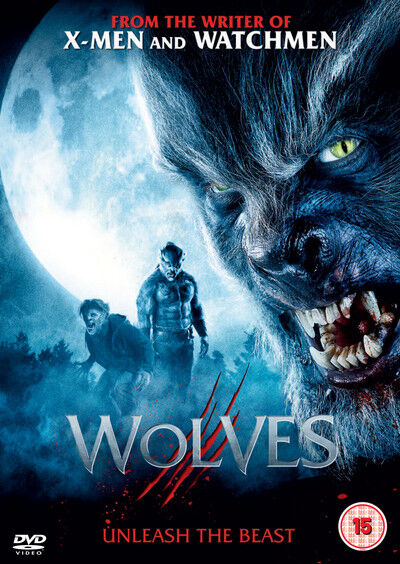
Wolves Written and Directed by David HayterDon’t forget, there are some good executives out there who will always give you good advice, too – so don’t be too downhearted. Just keep your head on straight. As always, David is keen to keep his feet on the ground during this phase. “Editing is where good writing comes from. So, I try not to be too hard on myself, and I also try not to get too excited about my work, which allows me to be harsh on the work – but not on myself, during this process”.

Sometimes things don’t work out, through no fault of your own, and you might find that – after all the work you put in, the writing, editing and arguing – the gig still gets scuppered and you’re back at square one. “It’s horrible. When it first happens, it’s soul-crushing. If you’re a working screenwriter though, it’s going to happen again and again, and again. So, you’ve just got to deal with it. There’s been times when I’ve spent 6 months, unpaid, working on a pitch and then, after a couple of calls and meetings, they decide they’re not going to go with it anymore.” The biggest piece of advice he gives me at this point, is to never get your hopes up. Don’t expect it to be in production until it’s in production.

So, is he able to talk about the projects he’s working on, now? Unfortunately not. But he does tell me that he has a few things in the pipeline and to keep an eye on what lies in store, in the near future – and that he’ll get back to me for another interview when this is released. For now, you can still find him on Cameo, where he’ll be fulfilling the many requests you have. If you can't wait until then, you will be happy to know that the Q&A version of this interview will soon be up, over on The Valkyries website.
Sunday, 15 March 2020

Interview With Voice Actor Roger Craig Smith


Quick Note: This interview focuses on the personal success of Roger Craig Smith, as well as his thoughts on Hollywood, 21st-century living and the highs and lows of his life. For those seeking out more voice-over related Q&A’s, you can check out the sister article to this interview, over The Valkyries website.

When I first get a message off Roger Craig Smith, I’m completely thrown off. You see, Roger is a popular voice actor who is known for bringing life to characters as well-known as Batman, right through to the Mouse in If You Give a Mouse a Cookie. This is a busy, uniquely talented guy and the idea that he wants to get into the nitty-gritty of voice acting with a UK-based writer is a surprise in itself.

Of course, if you were to speak to the man in the flesh, you’d quickly find out that this gentleman has no interest in labels and is simply seeking to make the most of his life. Indeed, it’s not just voice acting that he focuses on – rather, this is simply how he makes a living. Him taking time out of his day for me, as it turns out, is just another way in which he pays forward his energy to others.

Roger Craig Smith
Photo by Jen Rosenstein
It doesn’t take long for my nerves to show but, honestly, Roger is so laid back that these subside within a few minutes. After all, he can talk about pretty much anything – and that’s exactly what we do. Starting off gently, we get into how he began voice acting.

As it turns out, like most of us, RCS was originally looking to do something completely different. Beginning with a career in screenwriting, he tells the tale of how he side-stepped into comedy because he loves to make people laugh. After a good few years of what he refers to as “mimicry and theatre arts”, it was only after trying out for the Aspen Comedy Festival that the repeated question as to why he isn’t voice acting made him consider it as a career.

Even then, this isn’t something he took lightly. Instead, while pulling some shifts at Dave & Busters, Roger researched the best ways to get into voice acting and invested some quality classes, where his voices and acting chops were honed to a fine point. It was only after this, that he got together with a friend and asked them to help him get his demo reel together, in exchange for $50, which was then sent out – in person – to anyone and everyone who would listen.

“You have to treat it like entrepreneurship. You definitely need a business approach” he tells me, as he highlights how important it is to give yourself a solid foundation before heading straight to clients, “that, and the ability to talk to people on a human level – a skillset that is quickly being lost”. With this, we start talking about the small steps he took to ensure he edged his way into the Hollywood industry. Demonstrating perfectly how luck only lands on your lap when preceded by hard work, Roger tells me about how he worked as a PA in the industry through making sure that he spoke to everyone he came across about his ambition.

Valerie Macon RBTI Premiere 00001Like everyone who wants to achieve as much as possible, dealing with rejection is as commonplace as getting a gig, and Roger’s response to this is as pragmatic as you would expect. “It happens all the time”, referencing the Sonic move “you just have to keep yourself focused on what you want, and be grateful for what you have”.

“We’re all just trying to survive – look at this virus. It’s just trying to survive, and it reminds us of how weak and susceptible we are. There’s no winning, there’s no losing and no finish line.” He’s not actively being bleak, however, and he assures me that he’s aware of how others can view his body of work and takes pride in how these help people to have a touch of escapism. In fact, he makes a point of reminding me (and himself) that the real world is what is going on outside of his job.

“Keep falling forward. You’re gonna slip up and keep falling. You might be crawling. But, all of a sudden, you’ll look back and say to yourself ‘oh man, I’ve been crawling at times and sprinting at others but I’m so far away from where I was’ and I’m still doing that”.

Whether it’s politicians, athletes or actors, it’s generally agreed that these people are, in Roger’s words, “pedestalised”. All of these public figures are portrayed in a way that is sensationalised, whether that be the best or worst of their personalities and it’s quickly brought to my attention that, just because we might not agree with someone, it doesn’t mean that we should stick them on a pedestal and use them as an example of who we should – or should not – be. “You’re just as capable as these people at being imperfect. I hope that when we eventually work our way to the other side of this social media experiment, we all realise that everybody has got stuff – the good and the bad. You have to allow for people to grow and make mistakes – with bad behaviour being punished as is applicable”.

He bemoans those moments where he finds himself comparing his life to others, in which he can often consider his life as ‘less-than’ anybody else. “I’ve had the benefit of growing up without it, whereas kids today are growing up with everything on screens. Their whole existence has been staring at screens and it’s sad – and I hope there’s a pendulum swing back to the other side”.

Naturally, this cynicism does come a place of experience. When Roger was in his late 20’s, he suffered with a severe bout of pneumonia, which left him hospitalised for 6 days. As I’m sure you can imagine, this was not a pleasant experience. And yet, in typical RCS style, he quickly bounces back with “now I know what people mean when they say ‘at least you’ve got your health’!” – a phrase he certainly believes in. And one that we discuss, in-depth, while chatting about the differences between individuals whose viewpoint in life is much more hardy and positive than we’re often able to see, online.

On the other end of the scale, there are also those whose entitlements can bring down the overall mood of a studio. “You see it a lot in Hollywood. Now that the gaming industry is making a LOT more money than it used to, we’re seeing an influx of influencers and on-screen actors coming into the studio. And a lot of these people have no respect for the industry as a whole, which you can see in the way they treat the process”. Referencing a few moments he’s had with past experiences, he is also careful to offer the viewpoint of Troy Baker (his co-worker and friend), who has argued that anyone who is capable, and right for the role, should be able to work in any industry. “I just have a bit of a chip on my shoulder about it, because I think it can make the whole process harder when you get the wrong person for the role”.

It seems only natural at this point that question of what makes a voice actor so good at their job comes up – is there a secret formula that will lead the everyday person into the role of voice-over work? “The art and the unique element comes into it, for you as an individual, when you can take something that has been done before and twist it, to turn it into something new. It’s always on the fly and it always comes down to who you’re working with”.

It seems that, if you can speak faster on command, add an accent where required and maybe throw in a couple of idioms and/or speech impediments, you might just be on your way. Whether it’s adding a soft Russian accent to Batman in
Superman: Red Son (available digitally, now) or mixing together a range of accents into what he calls “Italiaspanglanish” for Ezio, there’s a huge array of examples of this, within his body of work.

Of course, this is easier said than done, as many hard-working actors find out along their journey. “That’s why you’ll never have my career, and I’ll never have yours. That’s both the beauty and the hard part of doing what we do. There are so many new people coming into the studios now – but there are still so many recognisable voices that you can hear, as soon as they hit a certain cadence or delivery”. This isn’t an industry of impressions, after all, it’s about flavouring your character with the right tone and inflections. At the same time, all of the technical stuff can be taught along the way.

He does, however, state that he’s also a bit of a homebody, as he’s hyper-aware of keeping his vocal cords relaxed and ready for whatever job is next. “Staying physically healthy is important and getting lots of rest is the only way to keep yourself ready for whatever is coming next, so I try and stay healthy”. Still, he’s keen to point out that he doesn’t do any vocal exercises beyond knowing what his current range is and staying away from work that could possibly harm his potential for the next gig.

This is one of the reasons why Roger stays away from so many conventions. While he always appreciates his fans, which you can see in how he converses with them on a regular basis through his Twitter and Instagram accounts, doing weekend-long work can be damaging. “You’re jet-lagged, you’re talking all day long and hugging people, shouting over background noise and doing impressions of your work, constantly”. Even short stints during talks at his local college, where he offers his time to audio students, can have an impact on the stress caused to the vocal folds, which has a knock-on effect to his work.

There’s no doubt that Roger is opinionated in the best possible way, in that he is continually considering different angles to an argument. As with most intelligent people, he takes everything in the world with a pinch of salt and seeks to escape any bitterness caused by that salt, by getting away as much as possible. At times, this means chasing down as many different pursuits as he’s able to fit into his busy schedule, such as American Sign Language (ASL). At others, it can simply mean going down a mountainside as fast as he can, on his bike. 

One such pursuit that he has become increasingly associated with is his astrophotography, which you can catch on My Shots in the Dark. Initially starting out with an interest from a young age, he decided to take things a little more seriously once he had some money to play around with. “I bought a rudimentary telescope and – out of sheer luck – focused on what I thought was a star, which was low on the horizon. It actually turned out to be Saturn, and I could see the rings” he says, before mimicking the state of wonder he found himself in. “Then I wanted to find out how to take a picture, so I went online and researched as much as I could – and it just went on, from there”.

A shot of RCS by Babek Tafreshi
This is a fantastic summary of a man whose default face reverts to a gentle smile, when discussing the unique aspects of space and how much has been left undiscovered. Roger is definitely a guy who can show dedication and perseverance, in order to get the right shot – something he enjoys sharing with his followers, whether they appreciate it or not. “It’s the perfect hobby for a guy who works during the day and wants to enjoy some downtime at night, where I don’t have to be interrupted”.

Through this, he has also discovered the International Dark-Sky Association, whose work revolves around reducing the impact of light pollution, which can affect wildlife and human health, as well as be a huge source of waste across the world. Knowing that RCS has been approached as a delegate, I quickly ask what we can all do to help reduce our own light pollution, to which the answers are as simple as you might expect:
  • Put a cover over any outdoor lighting, so the light is reflected downwards
  • Try to minimise your usage of outdoor lighting
  • Consider the types of bulbs you’re using (LEDs are fine, just try to avoid blue light emissions)*

Unfortunately, at this point, I’m aware that we’ve been talking for two hours and, as giving as he might be, I definitely don’t want to eat into too much of his time. So, I finish off with a question of what he would send into space. His answer, which catches me completely off-guard, involves shooting a doll of Ezio out, which slowly dissolves due to radiation – but not before taking down the International Space Station. And I really can’t summarise my short time with Roger Craig Smith any better than that.

Stanley MW 08-20-17
If you look, really closely, you might just spot Ezio causing the downfall of science

*More info on this can be found on the IDA website