David
Hayter is definitely a busy guy. When I first contact him to request an
interview, he is quick to accept and more than willing to offer up as much time
as I need – but finding that time is a very different story. Between his busy
schedule and well-deserved downtime, we go back-and-forth for a short while, in
an effort to slot a chat in. In the end, it comes as a last-minute message,
“can you do today?”, and with a very happy acceptance from myself, we manage to
squeeze in a few hours between his morning writing and an afternoon meeting.
Beginning
with a brief chat about my unusual accent, he manages to pin down not only
exactly where I’m from, before I have a chance to explain, but follows with a
dead-on impression. It turns out one of the reasons he’s able to do this is due
to his previous talks with the legend that is Alan Moore. Of course, for those
who follow Hayter’s history, they will know he has worked on the master
novelists previous work of Watchmen – a popular textual transformation of the graphic
novel created in 1986-7.
“I was
actually over in Manchester about 2 summers ago, for a comic con. It was very
nice! And ‘Hayter’ is actually Welsh, so it’s really like my homeland”.
Travelling for cons, of course, is part and parcel of David’s job – but he was
a sufferer of wanderlust long before his career took off. Canadian by birth, he
and his mother travelled considerably as kids, before he returned from Japan at
around the age of 20, when he eventually moved back to California. These early
years of adventuring, it turns out, were a key part of how he got into
performing.
“To get to
know the community, my mother would take part in a lot of community theatre
projects. We moved to California when I was 9 and she saw an ad for a kid's
theatrical production of Pinocchio. She told me to audition – so I did – and I
got the part. After that, a girl asked me for my autograph, and I thought ‘oh,
this is pretty good’. The writing came up later than that, when I was about 12.”
Growing up at a time when Star Wars and Indiana Jones were hitting the
pictures, Hayter was inspired to write stories of fantasy and adventure, along
the same lines. And so, he began to put pen to paper, in an effort to bring his
imaginary worlds to life.
He laughs
when I ask how this turned into a profession, “I don’t think I ever became a
professional!” he remarks, before going on to say how he managed to write a
full script when he turned 22. “It was a terrible vampire script. I had a
director attached and we tried to get that set up but never quite did. Apart
from that, I never thought of pursuing writing as a career”. Like so many, he
was working hard in every way he could, in an industry he loves, when he “fell
ass-backwards” into his first professional scriptwriting job.
“I got a job answering the phones on the movie
X-men, but I knew the director – so, I suggested a scene to him and he went
‘yeah, go write that for me, let’s put that in the movie’. After that, I was
doing re-writes. By the end, I had done so much writing that I ended up getting
sole credit.” At this point, I can’t help but comment on the rarity of having a
director allow for a perceived outsider to have so much impact on a major film.
“Yeah, he wasn’t precious about it, at all. It was good of him to do that, and
it helps that he wanted a writing partner who wasn’t tied down by contracts and
one-step deals. He could make me write as many pages as he wanted, I was just
always there and able to make changes.”

Naturally,
it helps to always be available to your director when they want or need you.
That said, having such an intimate knowledge of the characters – and how they
think, act or interact with each other - before you need to write about them,
can be a major benefit.
Being a big pop
culture geek and gamer at heart, David inherently knows what works and what
doesn’t, when it comes to writing up a script or voicing a beloved game
character. Yet, this doesn’t always have to be the case, “there’s no one way to
do it – it’s a different path for everybody. I was hoping that, when I arrived,
they would turn me into Tom Cruise. Unfortunately, it didn’t work out that
way”.
He is keen
to point out that, in the “8 or 9” years it took him to start acting and
screenwriting at AAA level, he had to venture into other areas of Hollywood
life, which led him to voice acting among other career paths. “That’s just how
I found my niche, it’s how everyone finds their niche” he states, when I ask if
the variation is important to professional development.
In terms of
his personal preference, when it comes to acting over writing, there are no
clear winners in Hayter’s’ eyes. “I prefer the job of acting, above anything –
particularly voice-over, which is just great fun. But I prefer the career of
writing, because you have a little more control over where you’re headed and
the projects that you get to do”. At the end of it all though, this is clearly
a guy who is enjoying how his trajectory has curved, as he loves almost every
aspect of every gig he takes on.
“I think
all actors should learn about writing, and learn to create their own material”
he mentions, when we discuss how both sides of his career can help to support
the other, “it’s the only way, as an actor, that you can have any control over
what you do and what parts you get to play”. So, does his work as a
screenwriter allow him to shift and change up any scripts he’s given? Not
necessarily – but it certainly does no harm when he finds himself writing up
new works.
“It
definitely helps when you’re creating something, to know how the lyricality of
the voice works off the page. Dialogue that looks good on the page, doesn’t
necessarily speak well – and vice versa. I turned in a script for a show last
year and the showrunner actually said to me ‘your dialogue worked a lot better
than I thought it would!’. But that’s how people talk – it can look simple, or
fragmented and even monosyllabic – in the end, the rhythm is there and it’s
real”.
 There’s a
running theme here, between David and other actors I’ve spoken to in the past,
where music and voice acting seem to run concurrently with each other. So, I
quickly chime in and ask him if he has any musical background, to which he
responds “yeah, actually, I went to Ryerson Theatre School in Toronto, which
had a strong music component to it”, before he laments his dancing skills –
which they also attempted to teach him.
There’s a
running theme here, between David and other actors I’ve spoken to in the past,
where music and voice acting seem to run concurrently with each other. So, I
quickly chime in and ask him if he has any musical background, to which he
responds “yeah, actually, I went to Ryerson Theatre School in Toronto, which
had a strong music component to it”, before he laments his dancing skills –
which they also attempted to teach him.
“I’m also
learning to play the guitar” he drops in, casually, before discussing how
working with music helps him to activate a part of his brain that allows him to
relax and regroup his thoughts. “If I’m writing all day and my brain is just
cooked, I can sit down and lose myself in the guitar and the music”. Here, we
agree, the order of mathematical elements found within music can help to engage
a completely different side of your abilities. “Writing can really suck the
life out of your brain, especially if you’re doing 8 hours a day, to a point
where you can’t really even communicate anymore. So, using music, you’re able
to refocus on what matters”.
At this
point, as I’m sure you can tell, it’s clear that David is remarkably easy to
talk to about almost anything. This seems to be a recurring theme within the
voice acting and screenwriting world, which leads me to ask whether being able
to gel well with a team is something that is essential to the job. “It’s
definitely not essential – but being fun and engaging will take you a lot
further than being an obnoxious prick. I think a huge benefit to the ‘Me Too’
movement is that there has been a real effort for people to behave better, too.
I’ve always tried to be respectful, of course, but there’s definitely a lot
less lunatic, a-holes to deal with now!”
Working in
Hollywood is, without a doubt, very stressful and David makes a point of highlighting
how easy it is to become swept up in heated debates about budgets, time and
pressure. In order to combat this, he looks at those he works with and always
tries to make the job engaging and fun for them, as well as himself. “That’s
also where the acting side of it can come in,” he tells me, “because most
writers are generally very isolated people. That usually leads to them not
communicating particularly well, face-to-face, as their work almost entirely
consists of written correspondence. But, if you’ve been an actor and had to go
through hundreds and hundreds of auditions, it becomes a lot easier to talk to
people and interact”.
As it turns
out, this is also a key part of staying cool when meeting with directors or
pitching huge projects that are close to your heart. While David describes
himself as being fairly confident in his abilities, his general demeanour is
calm and open - and he’s clearly open to working with the many criticisms that
come with writing and acting. “The more relaxed and confident you are, the more
likely they will be to hire you and the more confidence they will have in you,
as their writer or actor”.
Thus, the biggest piece of advice he can give to new writers is to simply practice being
confident when they’re going in to give a pitch. “’Fake it til you make it’ is
a common cliché – but it’s true. Watch videos of confident people and do what
they do - I got it mostly from Harrison Ford or Tom Cruise. Just watch these
people who are so otherworldly confident and create your own take on that.
Don’t talk too quickly, don’t be too solicitous and try not to use your nervous
face!”.
It’s clear
that David Hayter is able to deal with the comings and goings of a fast-moving
business with apparent ease, so I’m keen to discuss how he manages stress –
particularly at a time like this, where so many people are looking to avoid
stress through their writing and other creative outlets. “I read a lot about
Buddhism and the Dao, growing up in Japan, so I basically have learned to
meditate.” He says, before going on to mention a great technique he learned
from a book called Ransom, by Jay McInerney. Using the same system as the character in the
book he meditates, one-by-one, on the problems he may be having. “Whether it’s
a horrible fight with your girlfriend, or a looming test you don’t feel
prepared for – you treat it in the same way. Focus on each one, pluck it out of
your brain and put it in a box – and do this for each problem. Once you’ve done
that, take the box and set it on fire. Just let it all go.”

This is not
entirely dissimilar to CBT techniques I was taught and have worked with
previously, whereby you take a look at each, individual problem and focus on
ways to overcome these, separately. Of course, there is no burning box, which
means there isn’t quite the same feeling of catharsis. However, upon mentioning
this to David, he tells me of another method which he finds is a great way for
dealing with writer’s block and general frustration – ideal for working in
conjunction with the McInerney technique mentioned, above.
“Just
before I got the part of Snake, I read a book called The Artist’s Way, by Julia
Cameron -it’s like a workbook to help you reignite your creativity. A big part
of that is, in the morning, you just need to write everything out, like a
stream of consciousness. Nobody will ever see it, just go for it and you’ll be
able to put your problems into perspective.” This technique, he excitedly goes
on to say, is also a fantastic way of getting your brain over humps in your
writing, “just rant about where you’re at in the plot, and what you’re
struggling with – just let it all come out on the paper. In the end, your brain
will just start throwing out random ideas, and you’ll suddenly find the problem
is being resolved, purely through this technique”.
This, then,
explains how David is able to always maintain his composure – even in the most
stressful situations. That said, while he strikes me as a very relaxed guy who
enjoys the job, whether he sees himself as a laid-back person is still up for
some debate. “Sure, for the most part, I’m pretty relaxed. I’m still
laser-focused on my work and I’m probably not someone you want to fuck with,
though. It’s not so much of a problem anymore, though. When I was younger, I
was definitely more problematic!” he tells me, and we quickly exchange stories
of being – for lack of a better term – little shits, when we were kids. “That’s
good though!” he laughs, “it means you’re living your life and experiencing
what you can, despite it all”.
Talking
about turns and the unknown, we then get on to what getting the role of Solid Snake
meant to him and how it changed his life. “I knew it was always going to be
big. I saw the artwork, the cutscenes, and was generally aware that Sony was
going to be pushing this – but I had no idea that I’d be talking about it 22
years later. Going around the world and signing autographs, while doing video
shout-outs with the same voice”. Nine games later and still very active on the
circuits, his Cameo is full of requests for Snake. “It’s the only voice that
gets requested! I’m one of the lead Jedi in Star Wars: The Old Republic –
nobody ever asks for that!”.
While it’s
something he is clearly very happy to do, it still surprises me that so few
people have knowledge of Hayter’s writing career or other jobs. This, he says,
is due to a distinct lack of follow-through on work that he completes. “I
didn’t realise how many of my scriptwriting jobs would actually lead to a
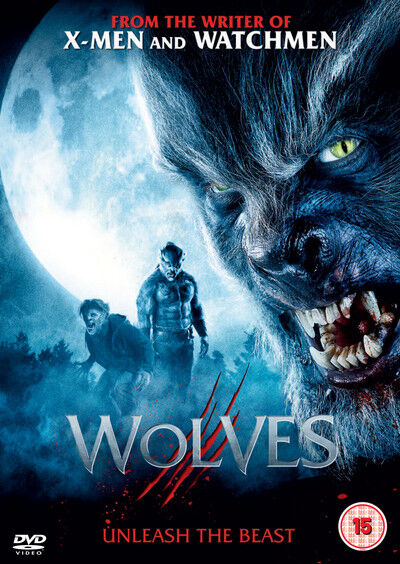
movie. In those first few years, I wrote 8 scripts which actually became movies,
out of roughly 20 - and I’ve probably written about 40- 45 movies in my career.”
 In the end,
he decided to side-step his career and work from a lower rung, on a different
ladder. By heading to Netflix and asking to be a part of a full writing team
there, he feels he has made much more personal progress toward his goals and
lead a more fulfilling career. Of course, TV writing is very different to film
writing, so he offered himself as 3rd or 4th in the room,
without the ties of big budgets and lead credits. “Many people might take it as
a step back. I used to be an A-list writer and now I’m a mid-level writer - but
it’s fine. It works and it’s invaluable. By putting my ego aside, I found a new
way to work to my best ability and get the best projects done”.
In the end,
he decided to side-step his career and work from a lower rung, on a different
ladder. By heading to Netflix and asking to be a part of a full writing team
there, he feels he has made much more personal progress toward his goals and
lead a more fulfilling career. Of course, TV writing is very different to film
writing, so he offered himself as 3rd or 4th in the room,
without the ties of big budgets and lead credits. “Many people might take it as
a step back. I used to be an A-list writer and now I’m a mid-level writer - but
it’s fine. It works and it’s invaluable. By putting my ego aside, I found a new
way to work to my best ability and get the best projects done”.
The risk,
however, has clearly paid off. David now sits at 2nd in the room and
has credits as an executive producer, for the show he’s currently working on. “It
wasn’t that difficult in the long-run and I’m really happy it’s gone that way.
So, my main advice for anyone breaking into the industry would be to not to get
too full of yourself – and don’t always believe your own hype. Just be willing
to do what it takes to get the best and be the most helpful to everyone on set”.
It’s fair
to say that this summarises David Hayter exceptionally well. Like many in the
industry, there’s no ego and no continual desire to be “better than” (whatever
that may be perceived as) beyond bringing your all to the work and beating your
own PB, as it were. Whether it’s Nolan North, Jennifer Hale or Roger Craig Smith, each personality takes criticism
in their stride, works hard and makes the effort to get along with their team.
I can’t help
but ask if all voice actors have this sense of humility, to which he responds, “I’m
fairly confident when I say ‘yes’. Everyone I have met in this industry has
been really giving and kind – pretty much across the board, everybody is super
nice. Everybody is just ready to play and just dive in. In particular, with
fans, the voice-over group as a whole are just spectacularly nice. And they want
the best for you, and they know that the fan’s experience in meeting them means
so much. For example, Nolan North is just this amazing, hilarious, lovely guy.
If you come to us as a fan, we will always make sure that you feel validated,
supported and listened to.”
In terms of
his writing, David is a big fan of mixing his gigs by working alone, as well as
with others. Usually, working on TV means he’ll be a part of a bigger group of
people, where he appreciates the camaraderie that comes with team writing. Meanwhile,
films will require a lot more solitary confinement in order to get the job done
– or, at least, they do during the first draft. This particular point in
screenwriting is one where he encourages complete creative freedom, and takes
great pleasure in having fun with the plot, characters and settings – because he
knows nobody else will read the work at this stage.
So, just
how does the process of writing up a screenplay work? Naturally, it depends on
what he’s been tasked with, first and foremost. However, given that he is now a
master of transforming text to on-screen productions, the process he uses to
get pen to paper, for these productions, has been finely honed. “I always go
back to the source material. I read through it and, when I’m done, I put the
book away and make notes of the key plot points, the great ideas and great
sequences. If there is something in there that I can’t remember, then it means
it didn’t make an impact when I read through it. So, the question then becomes
how I change that into film structure, and push on from there.”
From here,
he says that building on his work, follows the same metaphorical process as
creating a katana. “Story development works in the same way as the sword is
made, in that the metal is folded over and over until it can’t be broken. When
you create a story, you’re always going to be pouring back over the material,
folding it over and over. Eventually, it feels like a world that really exists –
it’s a living, breathing world”.
Even then,
there’s a huge element of compromise at play – and the more expensive the
project, the more debates you’re likely to have with executives. The biggest
key to handling this, Hayter tells me, is to remind yourself that this is not
your project – it will always be in the hands of the studio, because it’s not
your money. “You don’t own it. They own it. They may tell you to do things that
are terrible for their project and terrible for you, as a writer. However, you
have to learn how to negotiate that and work on ways to incorporate their ideas
without derailing the project”.
 Don’t
forget, there are some good executives out there who will always give you good
advice, too – so don’t be too downhearted. Just keep your head on straight. As
always, David is keen to keep his feet on the ground during this phase. “Editing
is where good writing comes from. So, I try not to be too hard on myself, and I
also try not to get too excited about my work, which allows me to be harsh on
the work – but not on myself, during this process”.
Don’t
forget, there are some good executives out there who will always give you good
advice, too – so don’t be too downhearted. Just keep your head on straight. As
always, David is keen to keep his feet on the ground during this phase. “Editing
is where good writing comes from. So, I try not to be too hard on myself, and I
also try not to get too excited about my work, which allows me to be harsh on
the work – but not on myself, during this process”.
Sometimes things
don’t work out, through no fault of your own, and you might find that – after all the work you put in, the writing, editing and arguing – the gig still gets
scuppered and you’re back at square one. “It’s horrible. When it first happens,
it’s soul-crushing. If you’re a working screenwriter though, it’s going to happen
again and again, and again. So, you’ve just got to deal with it. There’s been
times when I’ve spent 6 months, unpaid, working on a pitch and then, after a
couple of calls and meetings, they decide they’re not going to go with it
anymore.” The biggest piece of advice he gives me at this point, is to never
get your hopes up. Don’t expect it to be in production until it’s in production.
So, is he
able to talk about the projects he’s working on, now? Unfortunately not. But he
does tell me that he has a few things in the pipeline and to keep an eye on
what lies in store, in the near future – and that he’ll get back to me for
another interview when this is released. For now, you can still find him on
Cameo, where he’ll be fulfilling the many requests you have. If you can't wait until then, you will be happy to know that the Q&A version of this interview will soon be up, over
on The Valkyries website.